

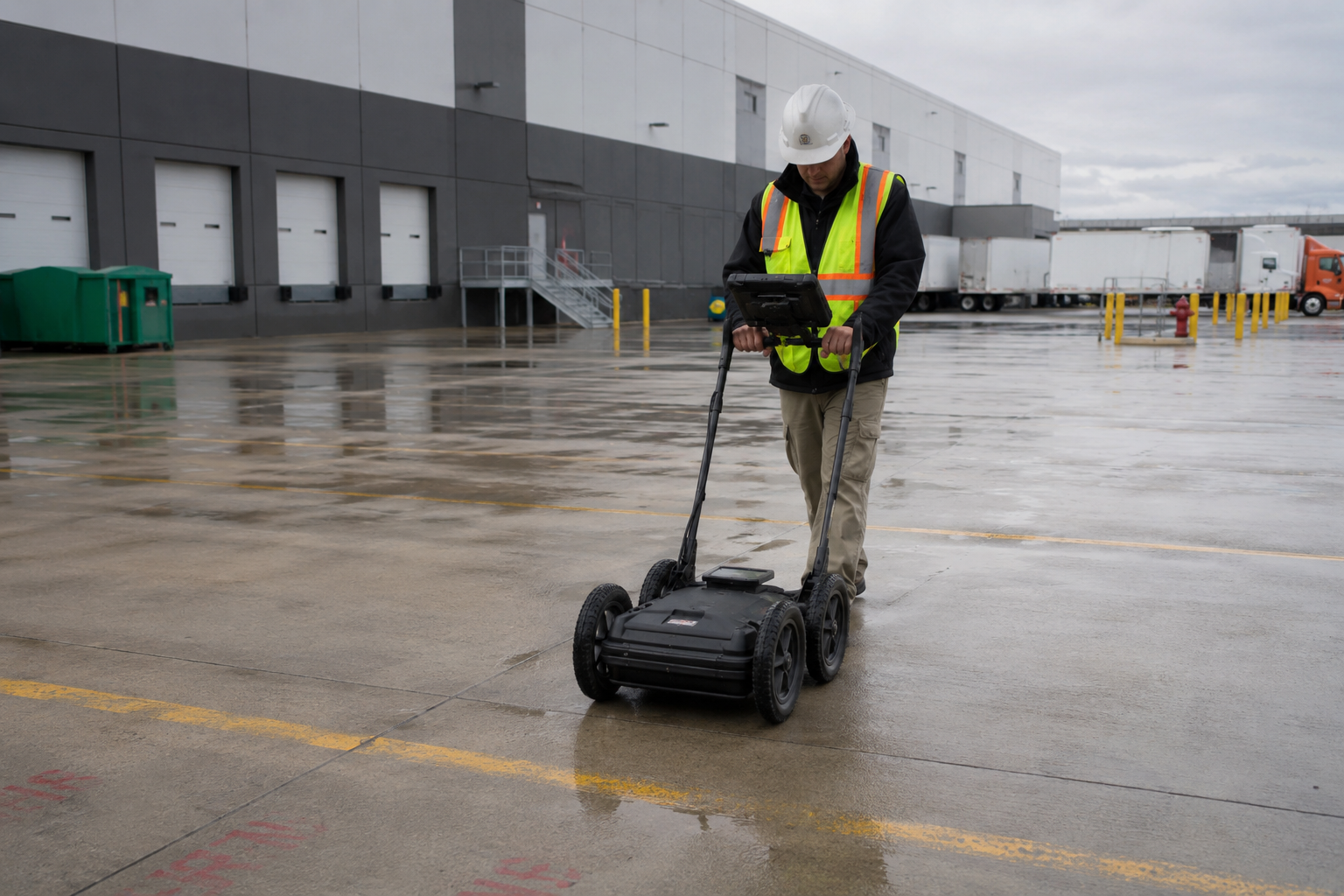
Commercial properties often have more going on underground than people expect. A trusted underground utility locator in Jacksonville, FL, helps project teams get a clearer picture before digging, cutting, coring, or site upgrades begin. GeoTek Services helps businesses move forward with better information instead of relying on guesswork or outdated records.
Warehouses, plants, and retail sites each come with their own set of risks. Buried lines, old maps, active work areas, and tight timelines can create problems before a project ever gets moving. Private utility locating helps teams spot those issues early, plan around them, and avoid turning a routine job into a costly disruption.
Learn more about why private utility locating matters on warehouses, plants, and retail sites.
Key Takeaways
- Hidden utilities can turn a small job into a big mess fast.
- Old maps and surface clues do not always reveal what lies beneath the site.
- Private locating helps crews dig, cut, and core with fewer surprises.
811 Does Not Cover Every Line
A call to 811 can help, but it does not show every line on a busy commercial site. Many private lines sit past the public mark, past the meter, or inside areas the business has changed over time. Crews may still run into electric, water, gas, sewer, storm, or data lines that never get marked.
Older sites can hide more than most teams expect. A warehouse may have added dock power, a plant may have added process lines, and a retail center may have added lights, signs, drains, or internet service. These changes can stay buried for years with little record of where they run.
GeoTek Services helps teams see what public markings can miss before work starts. Private utility locating gives crews better site information before trenching, boring, cutting, coring, or installing equipment. That extra step can help prevent delays, repair costs, shutdowns, and jobsite stress.
Old Site Plans Can Lie
A site plan can look neat, but the ground may tell a different story. Lines can shift after repairs, tenant buildouts, paving work, or equipment changes. Years later, that old drawing may point crews toward the wrong area.
Field locating helps remove the guesswork before work begins. It checks the site as it stands now, not as it once appeared on paper. That gives teams better facts before saws, drills, or machines touch the ground.
Hidden Lines Can Stop Production
A single utility strike inside a plant can spread far beyond the work zone. Private utility locating helps teams protect daily output before digging, cutting, or equipment work puts active systems at risk.
Shutdowns Can Start With One Missed Line
A damaged power or communication line can pause machines that need steady service to run. Even a short stop can push orders behind schedule and create pressure across the whole floor. Finding private lines early helps crews work around the systems that keep production moving.
Repairs Can Cost More Than The Strike
The first cost is the broken line, but the bigger hit often comes after. Teams may need emergency repairs, overtime labor, rush parts, and extra safety checks before work can restart. Private locating helps reduce those surprise costs before they reach the budget.
Plant Teams Need Fewer Unknowns
Busy plants often have layers of old lines, added systems, and changed work areas. Guessing where utilities run can force crews to slow down or stop once the job is already active. Better field information helps managers plan the work with less downtime and fewer last-minute changes.
Parking Lots Hide More Than Pavement
A parking lot may look like open space, but many lines can sit under it. Light pole feeds, storm drains, sign power, telecom lines, irrigation, and old unused lines may cross busy areas. An underground utility locator in Jacksonville, FL can help crews see what could be in the way before work starts.
Small site updates can still cause big problems. New signs, bollards, ramps, and pavement repairs may land near buried lines. GPR and EMI help crews find these risks early, and GeoTek Services helps businesses avoid costly setbacks.
Loading Areas Carry Extra Risk
Loading areas may look like simple concrete, but they often carry a lot more than truck traffic. Drainage, power, dock equipment, lighting, air lines, and communication lines can sit close to the work area. A missed line can slow shipping, damage equipment, or create safety issues fast.
Busy dock areas leave little room for mistakes. Crews may need to cut, trench, or drill near doors, ramps, and equipment that keep the site moving. Private locating helps show where hidden systems may cross the work zone before the job begins.
Small dock upgrades can cause big problems when crews work without enough site information. A new drain, post, repair, or equipment installation may be placed near buried lines. Finding those risks early helps contractors plan the work with less stress and fewer delays.

Concrete Slabs Can Hide Critical Systems
Concrete can look solid and simple, but it may hold systems the site depends on every day. Warehouses and plants often have conduit, drains, rebar, and other hidden features inside or below the slab. GPR concrete scanning helps crews check the work area before cutting, coring, or drilling begins.
The wrong cut can affect more than the slab:
- Power And Control Lines: Embedded conduit may feed equipment, lights, panels, or control systems. A hit can stop work in nearby areas and force urgent repairs.
- Drainage Routes: Floor drains and buried drain paths can sit below work zones where crews plan to cut. Damaging them can cause water issues, cleanup costs, and added repair work.
- Rebar and Reinforcement: Rebar helps the slab handle heavy loads, machinery, and daily traffic. Cutting through it without scanning can weaken the area and create future repair needs.
- Safety and Communication Systems: Some lines may support alarms, cameras, access points, or site communication. A strike can affect safety checks, staff movement, and daily site control.
Scanning before slab work gives crews better facts before they open the concrete.
Buried Utilities Can Create Change Orders
A project can look easy on paper, then change fast once digging starts. One unknown line can lead to repairs, new routes, extra labor, and schedule changes. An underground utility locator in Jacksonville, FL, helps teams price the job with better facts before costs begin to shift.
Change orders can hurt trust between owners, crews, and project managers. Early location provides estimators with a better view of what may affect the work area. GeoTek Services helps teams plan ahead, so a hidden line does not turn a simple job into a budget problem.
Identify Hazards With the Help of Our Underground Utility Locators in Jacksonville, FL
Hidden utilities do not care how simple a project looks on paper. Warehouses, plants, and retail sites can have buried lines, old records, slab conflicts, and active systems sitting right where crews need to work. GeoTek Services helps businesses find those risks early with underground utility locating services that make the next step feel less like a gamble.
Frequently Asked Questions
How can buried utilities affect a commercial renovation?
Buried utilities can slow down a renovation before the real work even starts. A hidden line under a slab, parking lot, or loading area can lead to repairs, delays, and sudden changes to the plan.
Why should crews scan before cutting into concrete?
Crews should scan before cutting because concrete can hide conduits, rebar, drains, and other systems. One wrong cut can damage the building and create a much larger problem.
What can go wrong if a business uses old utility maps?
Old maps may not show years of repairs, upgrades, or tenant changes. That means crews could dig or drill in an area that looks safe on paper but has hidden lines below.
When should a commercial site use private utility locating?
A commercial site should use private utility locating before digging, trenching, boring, coring, or installing new equipment. It helps the project team find risks before workers open the ground or cut into concrete.
Can private utility locating help prevent business downtime?
Yes, private utility locating can help reduce the chance of sudden shutdowns. Finding buried lines early helps protect power, water, data, lighting, and other systems that keep the site running.