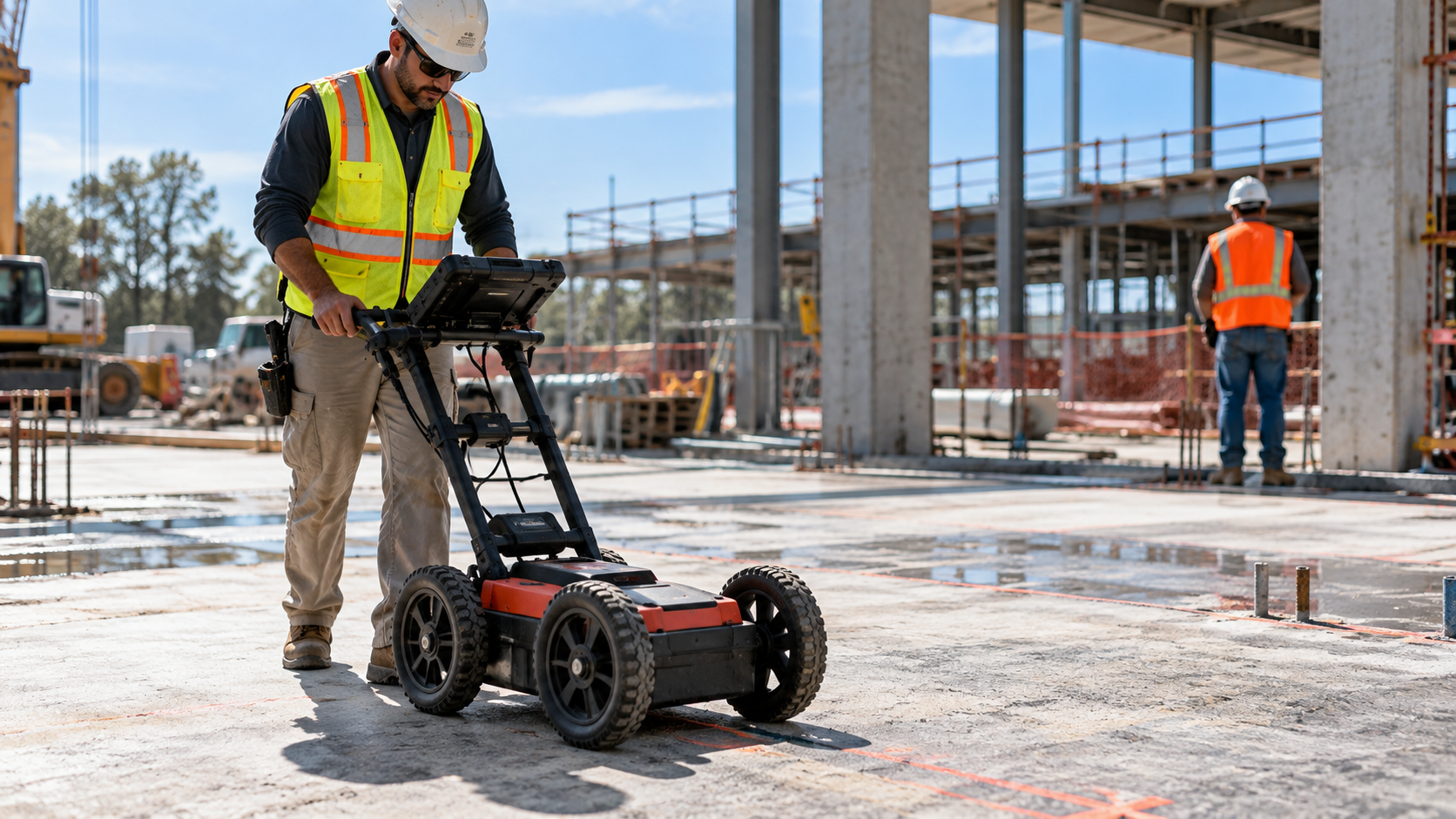
Construction schedules can fall apart fast when the ground holds something no one expected. Buried concrete, hidden tanks, old foundations, and voids can turn a planned work area into a costly delay. Crews need a clear picture of what sits below the surface before digging, drilling, or cutting begins.
GPR services in St. Petersburg help construction teams find hidden features before heavy equipment reaches them. Old plans do not always show what previous crews left behind, and guessing can put your timeline at risk. Geotek Services uses ground penetrating radar to help contractors find these problems early and plan the work with better information.
A scan before construction starts can save your crew from finding the problem at the worst possible time.
Here are the underground surprises worth finding before they start controlling your schedule.
Key Takeaways
- Hidden concrete, old foundations, and buried structures can derail a job faster than most crews expect.
- GPR can reveal costly problems before excavation, drilling, or cutting puts the schedule at risk.
- Finding subsurface conflicts early gives your team more room to adjust the plan before work slows down.
Post-Tension Cables in the Drill Path
One drill hole in the wrong spot can bring work to a sudden stop. Post-tension cables run through concrete slabs and help hold them under tension. Striking one during drilling can damage the slab, injure workers, and force crews to shut down the area.
A planned opening may sit right over a cable without anyone knowing it. GPR scans show the cable layout inside the concrete before the drill touches the surface. Contractors can use those findings to choose a safer spot for the opening.
Moving a core hole on paper is much easier than dealing with a damaged cable. Geotek Services helps construction crews locate these hidden hazards before drilling gets underway. That gives the team a chance to adjust the work plan without losing days to repairs and safety checks.

Rebar Packed Around Planned Openings
Construction drawings may show a simple spot for a new opening, but the slab can tell a different story. Steel bars may sit closer together than the plans show, leaving little room for cutting. Hitting that steel can stop the job while crews wait for a new plan.
Plumbing lines, electrical pipes, and equipment mounts all need space inside concrete. GPR services in St. Petersburg help contractors locate rebar before cutting begins. Scan results show where the steel runs, so engineers can review the planned opening and decide if changes are needed.
Heavy rebar can turn a small cutting job into a much larger task. Engineers may need to shift the opening or change its size to avoid damaging the slab. Finding that problem before demolition starts keeps crews from tearing into concrete they cannot cut as planned.
Can GPR Find Post-Tension Cables Before Coring?
Yes, GPR can detect post-tension cables inside concrete before coring work starts. Even a small hole can pose a serious risk if a tensioned cable runs through that spot. Geotek Services uses radar scans to locate these cables so contractors can review the area before drilling.
Crews can use the scan findings to mark safer spots for new holes in the slab. Striking a cable could lead to costly repairs, safety concerns, and work delays. Knowing the location in advance gives engineers a chance to approve changes before the drilling crew arrives.
Conduit Hidden Inside the Slab
A saw blade can cut through an electrical line before workers realize something is buried in the concrete. GPR scans can reveal hidden conduit paths, giving construction teams a chance to review the work area before cutting or drilling begins.
Old Electrical Runs Can Stay Behind
Past renovations can leave unused conduit trapped inside a slab long after the original equipment is gone. Some of these lines may still carry power, even if old building plans show they were removed. Crews need to treat unknown conduit as a possible live line until an electrician checks its status.
One Cut Can Affect Nearby Work Areas
A damaged electrical line can shut down power to equipment far from the cutting site. Production machines, lighting, and other systems may share circuits that pass through the work zone. Electricians must trace the damaged line and test the circuit before power can return, leaving other crews unable to finish their tasks.
Conduit Routes Can Change Near Floor Boxes
Floor boxes can hide changes in conduit direction that are hard to spot without scanning. Electrical lines may branch out beneath the slab or turn toward nearby equipment. Checking these areas before new cuts are marked helps contractors avoid paths where conduit lines come together.
Voids Below a Working Slab
Heavy equipment puts a lot of weight on concrete that may have nothing holding it up underneath. Water can wash away soil over time, leaving hidden gaps that weaken the slab’s support. Cracks, sinking, or sudden movement may appear once machinery starts rolling across the area.
GPR services in St. Petersburg help contractors spot changes beneath the concrete that may point to empty spaces. Engineers can then check these areas and decide whether the ground needs added support before work moves forward. Catching a possible void before heavy loads arrive can prevent slab failure and keep crews from facing unexpected ground repairs.

Footings Left From an Older Building
An empty construction lot may still hold pieces of the building that once stood there. Demolition crews sometimes leave thick concrete footings buried in the ground when tearing down an old structure. These blocks can sit directly where new foundations, drainage pipes, or utility trenches are planned.
Excavators may hit solid concrete instead of soil when digging begins. Removing an old footing can require hydraulic breakers, larger machines, and extra hauling trips. The crew may also need to stop digging while the project manager works out how to remove the barrier.
Old foundation records may leave out sections that were built decades ago. GPR surveys can help locate buried concrete before the site crew starts moving dirt. Engineers can then review the findings and decide whether the planned work needs a new route or the old footing must come out.
Slab Thickness That Suddenly Changes
A concrete floor can hide thick spots that turn a routine cutting job into a much bigger task. Areas near support columns, old equipment pads, and past building additions may contain extra concrete that changes how crews approach the work. GPR can help contractors check slab thickness before choosing cutting tools and setting up the job.
These hidden changes can affect how the crew handles the work:
- Column Areas May Need Special Attention: Concrete around support columns may be thicker to support the structure’s weight. Cutting into these areas without an engineering review could damage sections that help support the building.
- Old Machine Pads Can Slow Down Cutting: Heavy industrial machines may have required thick concrete bases that still sit within the floor. A standard saw might struggle with these sections, forcing workers to bring in larger tools or switch cutting methods.
- Building Additions Can Hide Uneven Concrete: Floors poured during past expansions may have different thicknesses where new concrete meets older sections. A blade that passes through one area may fail to reach through the next, leaving crews with unfinished cuts.
- Extra Concrete Can Change Labor Costs: Thicker sections can take longer to cut and produce more debris than the crew planned to remove. Extra blade wear, equipment rentals, and hauling trips can push the job beyond its original budget.
Checking slab thickness before cutting helps contractors choose suitable equipment and account for hidden work before it affects the construction schedule.
Keep Buried Problems Off Your Schedule With GPR Services in St. Petersburg
Hidden slabs, voids, tanks, and old foundations are easier to handle when you find them before crews start work. Geotek Services helps contractors see what is below the surface so they can adjust plans before a surprise turns into lost time. A clearer picture underground gives your team one less reason for the schedule to slip.
Frequently Asked Questions
What underground problems can delay a construction project?
Buried foundations, old slabs, storage tanks, duct banks, and other hidden structures can stop work once excavation begins. Finding these features early gives crews time to change the plan before equipment is sitting idle.
How does GPR help contractors before excavation starts?
GPR gives contractors a clearer view of buried features that may cross a planned trench, footing, or work area. Crews can use those findings to adjust excavation routes and avoid unexpected removal work.
Can GPR locate old foundations beneath a construction site?
GPR can detect buried concrete features such as old footings, pile caps, and foundation remnants. These structures often become expensive schedule problems when crews do not find them until digging has already started.
Why should crews scan concrete before cutting or drilling?
Concrete scanning can reveal rebar, conduit, post-tension cables, and changes in slab thickness before work begins. Knowing where these features sit helps crews choose better cutting and drilling locations.
When should GPR scanning happen during a construction project?
GPR scanning should take place before excavation, coring, saw cutting, or other work that could reach hidden subsurface features. Earlier scanning gives the project team more time to respond when the results uncover a conflict.