

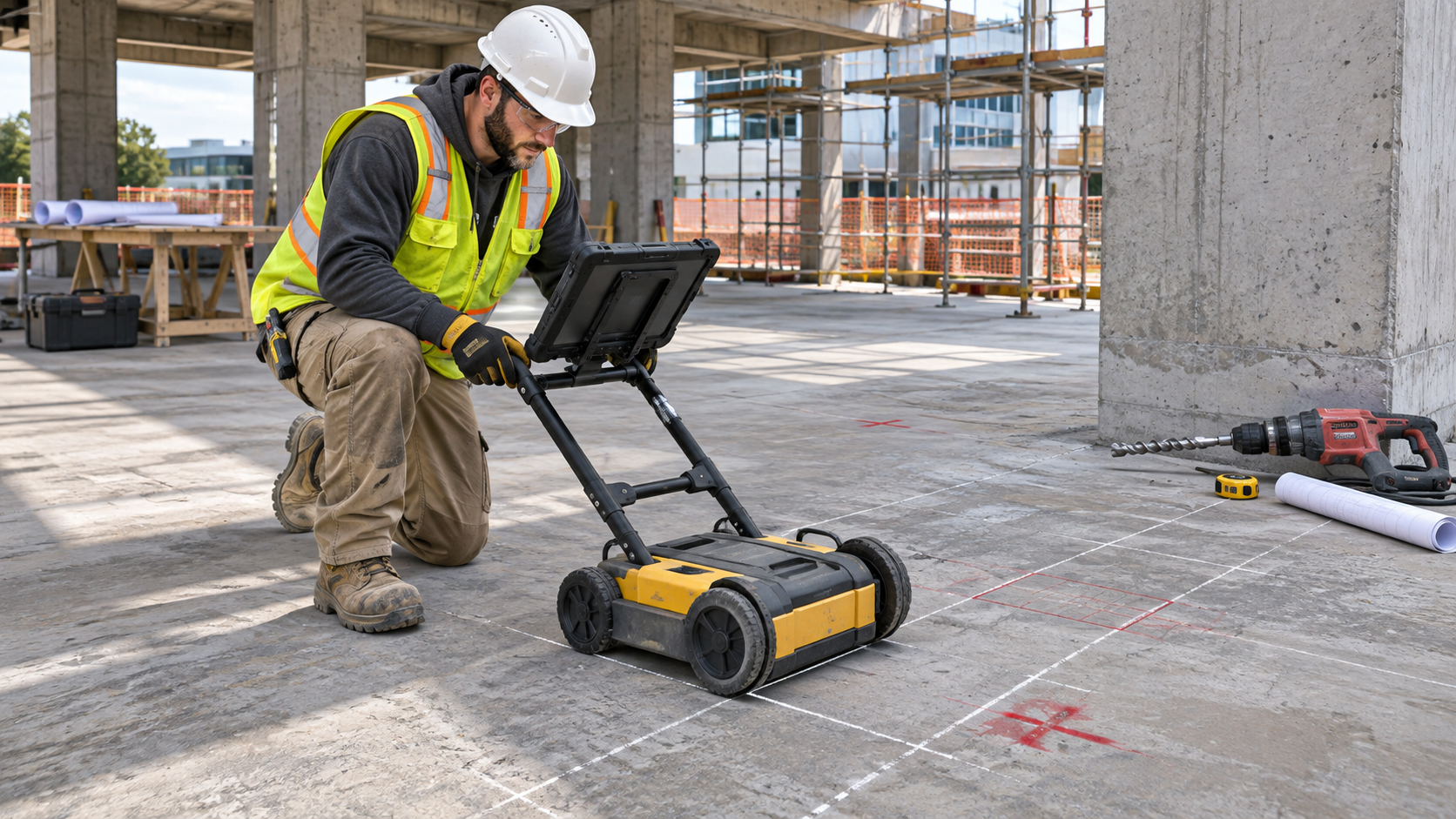
The drill bit doesn’t care what the blueprint says. A crew might mark a clear spot for a new pipe, only to find rebar right in its path. Steel can shift during a concrete pour, and old drawings don’t always show where it ended up.
Cutting into the wrong spot could damage important reinforcement and throw a project off schedule. Contractors who need GPR in Tampa, FL should know what lies inside the concrete before drilling begins. Geotek Services helps crews locate hidden steel, deeper rebar, crowded joints, and electrical conduits that could interfere with planned work.
Knowing what’s inside the concrete gives your engineer better information before approving new holes or structural changes.
Take a closer look at what GPR concrete scanning could uncover before your crew makes the first cut.
Key Takeaways
- Rebar can shift during construction, leaving hidden steel in places the original plans never showed.
- Crowded beam joints, overlapping bars, and deeper steel layers can turn a simple drilling job into a costly mistake.
- GPR concrete scanning helps reveal buried reinforcement and other hazards before crews cut into concrete.
The Rebar Grid That Shifted During the Pour
Fresh concrete can push steel bars out of place as it fills a form. Even small shifts may leave rebar closer to a planned drilling spot than expected.
Concrete Vibration Can Move Loose Bars
Workers use vibrating tools to remove trapped air from wet concrete. Poorly secured rebar may shift as the concrete flows around it. Once the mix hardens, those bars remain in their new positions.
Spacers Help Keep Steel in Position
Small supports called spacers hold rebar at the required distance from the concrete surface. Broken or misplaced supports can let the steel move during the pour. GPR scanning can reveal bars sitting closer to the surface than the plans show.
Actual Bar Positions Matter Before Drilling
A planned core hole may cross steel that shifted during construction. Scanning can help crews mark the bars and identify possible spaces between them. Engineers can use these findings to decide whether the hole needs a new location.

Hidden Steel Crowding a Beam Connection
Beam and column joints can hold more steel than a simple drawing shows. Extra bars overlap in these areas to help support heavy loads. That tight layout may leave little open concrete for new anchor holes.
Drilling into a crowded joint could cut steel that helps hold the structure together. GPR scanning can map the hidden bars and show where they cross. With those details, an engineer can check whether the planned hole needs to move.
Rebar Closer to the Surface Than Expected
A drill can hit steel much sooner than the plans suggest. Concrete should cover rebar with enough material to protect it from damage. Broken or misplaced supports during construction may leave bars too close to the surface.
Shallow rebar creates problems when crews drill holes for new equipment. Even a short hole could strike steel hidden just beneath the concrete. Geotek Services uses GPR scanning to help find these bars and estimate their depth.
Depth readings give contractors more information before drilling starts. Scan results can show where shallow steel may interfere with planned holes. An engineer can then review the findings and decide whether the drilling location needs to change.
The Second Rebar Layer Nobody Expected
A clear spot near the top of a concrete slab may hide more steel below. Some structures have rebar near both surfaces to support heavy loads. Contractors using GPR in Tampa, FL, can investigate these deeper layers before drilling.
Geotek Services uses ground penetrating radar to locate steel at different depths. Radar signals can reveal buried bars that aren’t visible during a surface check. Thick concrete and crowded steel may make some deeper bars harder to detect.
A drill passing through the upper layer could still strike reinforcement farther down. Missing that hidden steel may damage the structure and interrupt planned work. Reviewing scan findings with an engineer helps crews choose drilling locations that account for deeper reinforcement.
The Difference Between Rebar and Wire Mesh
Steel inside a concrete floor isn’t always made of thick rebar. Some floors contain thin wires joined in a grid called welded wire mesh. These wires can create radar signals that make the hidden layout harder to read.
The following details help explain what GPR scanning may reveal:
- Different Steel Sizes: Rebar consists of thick steel bars, while wire mesh uses thinner wires. Their size and spacing can affect how they appear in radar scans.
- Closely Spaced Wires: Mesh forms small openings between wires that cross each other. These tight patterns may produce overlapping radar signals that are hard to separate.
- Mixed Reinforcement: Some floors contain wire mesh along with larger steel bars. GPR readings may show both patterns, requiring a closer look to identify their locations.
- Hidden Steel Beneath Openings: A gap in the mesh doesn’t mean the concrete below is clear. Other bars, pipes, or electrical conduits could still cross the planned drilling path.
Reading these patterns helps scanning professionals identify possible hazards that contractors must consider before cutting into the floor.
When the Concrete Gets Thicker
A factory floor may have extra concrete beneath heavy machines. Thick sections can also appear near columns and other parts that carry heavy loads. Steel inside these areas may sit at different depths than in the rest of the slab.
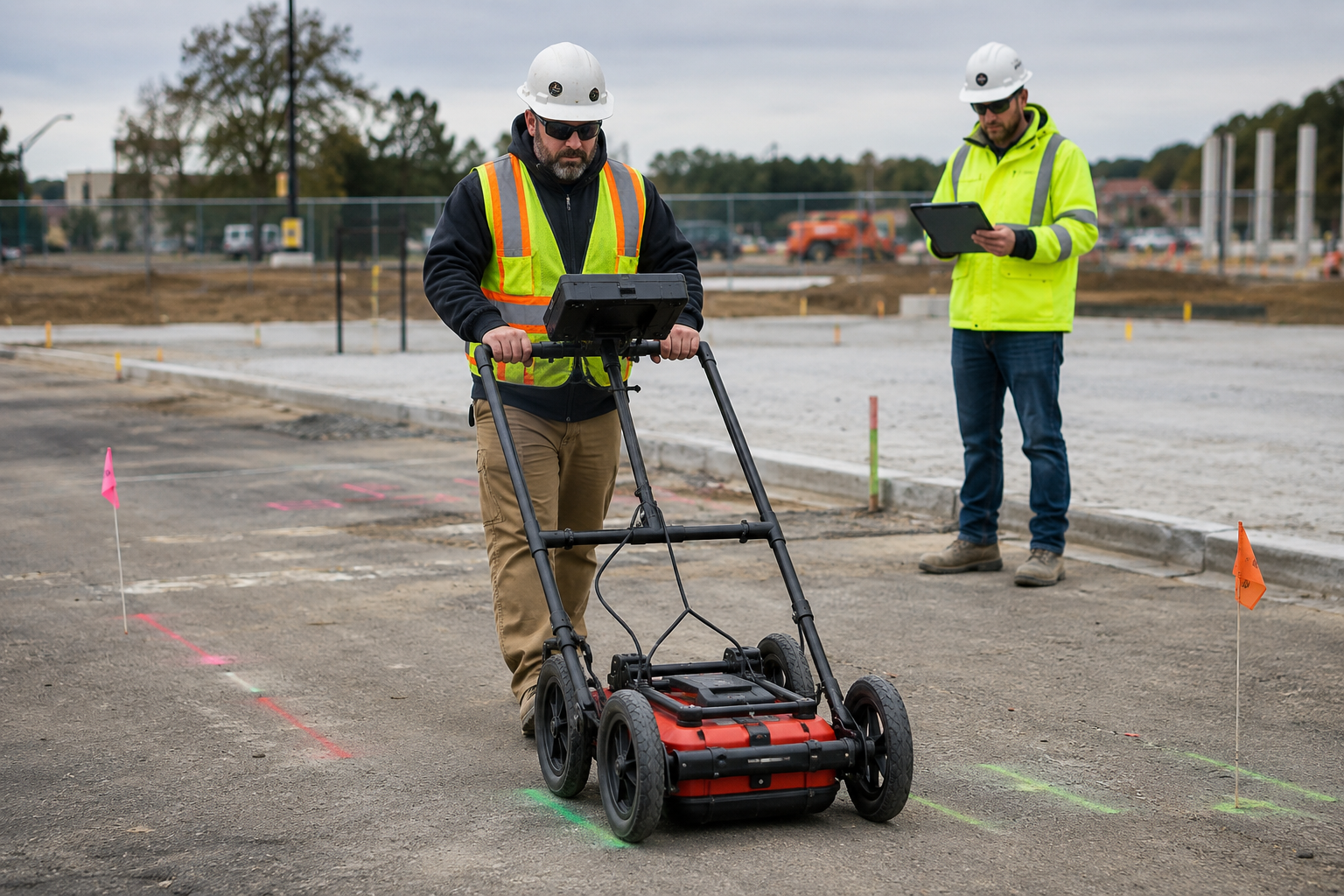
Drilling plans based on an even floor thickness could miss these changes. Geotek Services uses GPR scanning to help measure slab thickness and locate hidden reinforcement. Scan results can reveal where the floor changes, giving engineers more information before approving new holes.
Rebar That Doesn’t Follow the Construction Joint
A straight line across a concrete floor may look like a safe place to cut. That line could mark where workers poured fresh concrete against an older section. Steel bars may still pass through the joint, linking the slabs together.
Cutting along this seam without checking for rebar could damage those hidden connections. Some bars help carry weight between the sections and keep them aligned. Removing or cutting them may affect how the concrete handles heavy loads.
GPR scanning can help reveal steel that crosses beneath the visible joint. The results may show where bars run across the planned cutting area. Engineers can then decide whether the cut needs to move or the work plan must change.
Know Where the Steel Really Sits With GPR in Tampa, FL
A blueprint might show a clear drilling spot, but the concrete could tell a different story. Geotek Services helps contractors locate hidden rebar, overlapping steel, and buried conduits before those surprises disrupt the job. Give your crew a better starting point and avoid turning a routine concrete cut into an expensive structural repair.
Frequently Asked Questions
Why does rebar end up in a different spot than the construction plans show?
Steel bars can shift when workers pour and vibrate wet concrete, especially if their supports move. GPR scanning helps contractors find where the reinforcement actually sits inside the finished structure.
What makes rebar harder to locate near concrete beams and columns?
Beam and column connections often contain tightly packed steel bars that overlap or cross in different directions. These crowded areas create complex radar reflections that require careful interpretation.
Can GPR concrete scanning find multiple layers of rebar?
GPR can help identify reinforcement at different depths when concrete conditions allow radar signals to reach the deeper steel. Closely spaced upper bars might block or weaken signals from the lower layer.
How do contractors check for hidden steel before enlarging a concrete opening?
Contractors can scan the surrounding concrete to locate rebar that crosses the planned cutting area. The results help engineers review possible changes before crews remove concrete near important reinforcement.
What should contractors do when GPR finds rebar beneath a planned anchor hole?
Crews should stop and have the proposed anchor location reviewed before drilling into the steel. An engineer can determine if the anchor needs to move or if the installation requires a different design.