

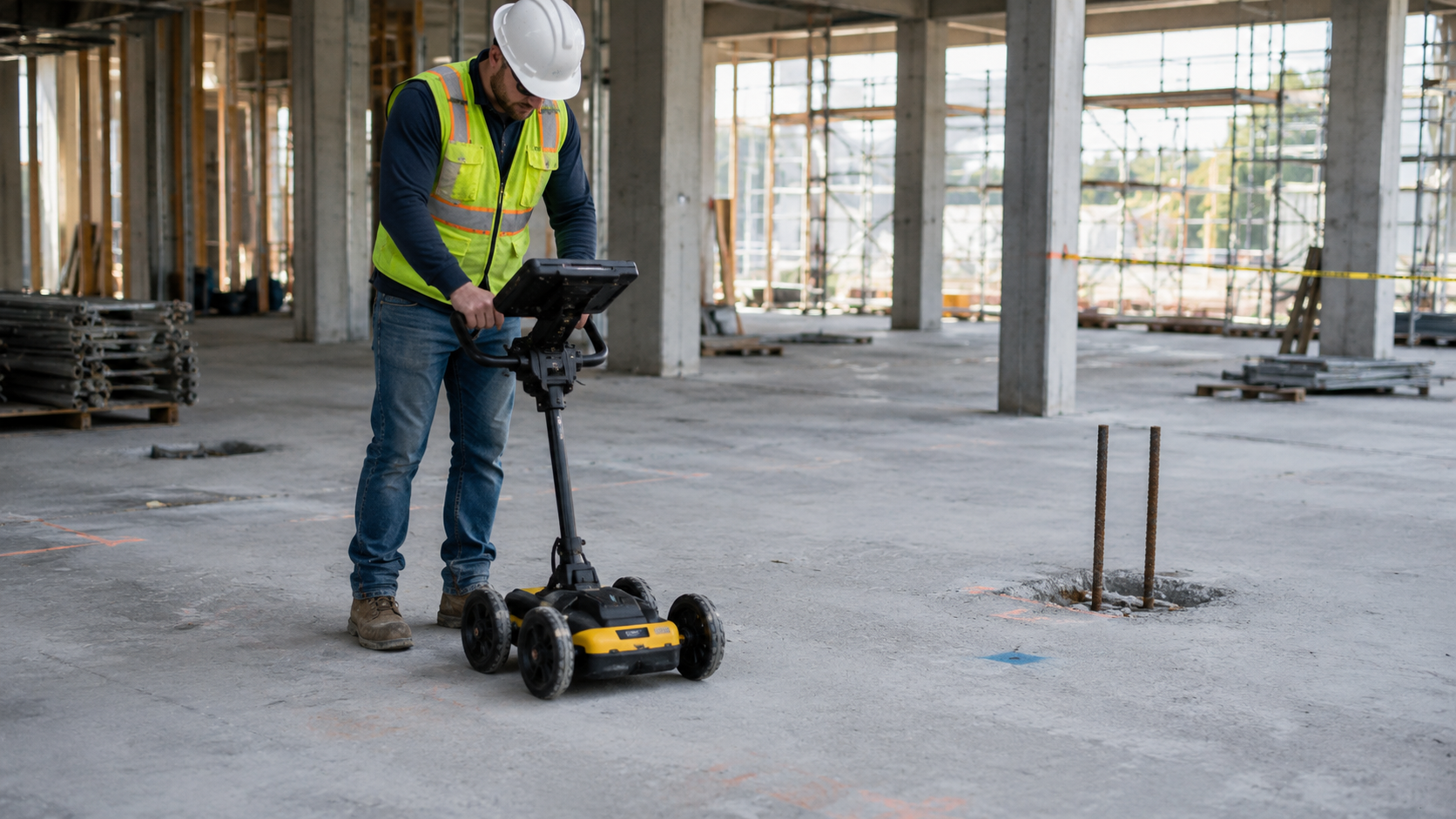
A concrete slab can hide costly trouble beneath a calm surface. Professional concrete scanning gives crews useful information before drilling, cutting, or coring begins. An early scan could prevent damage, delays, and surprise repair bills.
Hidden objects can force a crew to change its entire work plan. GPR helps teams look inside concrete without breaking the surface. Crews have more time to move cuts or drill points away from danger. Hiring Geotek Services helps protect the project before tools reach the slab.
Keep reading to learn how early GPR scanning helps protect rebar, pipes, and cables.
Key Takeaways
- Early GPR scanning exposes hidden trouble before a drill, saw, or core machine reaches the concrete.
- Radar findings help crews move planned openings away from rebar, pipes, cables, and other buried objects.
- A short scan before work begins could prevent costly damage, long delays, and surprise shutdowns.
The Scan Starts Before the Damage
Concrete can look ready, even as the job sits one bad drill away from trouble. Early GPR work gives Geotek Services time to study the slab before crews commit to a cutting plan.
Radar Pulses React to Material Changes
High-frequency radar energy enters the concrete as the antenna moves across it. Objects and changes inside the slab send part of the signal back. Recorded patterns give the technician data to review across the scan area.
Crossed Passes Track Each Route
Scanning the same zone in different directions creates more than one view. Long responses that continue across several passes help trace the path of a hidden object. Matching patterns also help separate a real target from a weak or unusual reading.
Slab Conditions Shape the Scan
Moisture, dense steel, and slab thickness affect how radar signals travel. Technicians adjust scan spacing and equipment settings based on those conditions. Crowded areas receive extra passes so nearby responses do not blend into one confusing pattern.
Post-Tension Cables Raise the Risk
Stored force makes every post-tension cable a serious risk. Cutting into one could release energy and damage the slab. Workers may face danger while the project comes to a sudden stop.
Ground-penetrating radar helps trace cable paths and anchor zones before the work layout is set. Planned holes move away from risky spots before coring or drilling begins. A scan from Geotek Services helps crews protect the slab, schedule, and people nearby.
Rebar Maps Guide New Openings
Good placement takes more than finding the center of a hole. Reinforcing steel may pass near the edge of the drill path. Every part of the opening needs enough room between the bars.
GPR readings trace how the rebar travels across the slab. Spacing between responses shows whether the planned opening fits between steel lines. Areas with tight gaps are removed from the layout options.
Once the pattern is mapped, the crew compares it with each anchor, pipe, or core hole. Slight layout changes move the cut away from the reinforcing steel. Findings from Geotek Services help teams choose a better spot before drilling begins.
How Does GPR Find Rebar in Concrete?
Waves that bounce off steel allow GPR to find rebar inside concrete. Moving the antenna across the slab sends repeated pulses into the work area. Those reflections create screen patterns for the technician to study.
Passes made in different directions help follow each steel line across the scan area. Pattern changes show where a bar enters a planned cut, core, or anchor point. Updated layouts keep drills and saws away from the detected steel.
Conduit Damage Goes Beyond One Hole
Damage inside one small hole can spread across an entire site. Power loss may stop lights, tools, controls, or nearby equipment. Other trades could lose hours while the area sits quiet.
Electricians may need to open more concrete around the damaged conduit. Broken wire and conduit sections require new parts and added labor. Shutdown time grows while crews inspect the line and finish repairs.
Detection before drilling gives crews time to compare conduit routes with the hole plan. Marked findings help move the drill away from hidden electrical paths. Using GPR, Geotek Services helps teams avoid a small strike that could cause a much larger setback.
Metal Pipes Create Hidden Project Costs
Metal pipes can turn a routine core into a chain of costly work. A damaged line may leak as soon as the bit breaks through. Plumbers, cleanup crews, and other trades could lose valuable time.
Here is how a hidden pipe can create costs far beyond the drill point:
- Leak Control Expands the Job: Water or another material may spread beyond the opening. Cleanup and drying add labor before pipe repairs even begin.
- System Shutdowns Reach Other Areas: Crews may need to shut off the connected line during repairs. Nearby rooms or equipment could lose an important service while work stops.
- Concrete Removal Adds More Labor: Repair teams may need to widen the opening around the damaged pipe. Extra demolition and patching push labor and material costs higher.
- Crowded Slabs Need More Review: Metal pipes may sit close to rebar, conduit, or wire mesh. Added GPR passes help trace each response before the crew chooses a core location.
Early GPR scanning helps crews move the planned opening before hidden pipe damage drains the budget.

Wire Mesh Shrinks the Safe Zone
Welded wire fabric may cover most of a slab with a repeating grid. Tight gaps give an anchor or core hole little room. Outer edges of the bit may still clip wire even if the center looks open.
Grid readings help the operator follow the spacing and direction of the mesh. Size of the planned opening is checked against the space between wires. Layout choices then shift toward areas with fewer mesh responses.
Targeted Scans Protect Core Locations
Center marks tell only part of the story. Conduit, rebar, or pipe may cross the edge of a planned opening. Full scan coverage must include the whole area touched by the core bit.
Survey lines extend past the proposed hole in several directions. Readings around the mark help trace objects as they approach the drill zone. Path changes are then compared with the planned cut area.
Drill size matters because a wider core needs more open space. Angled holes require a scan along their planned route through the slab. Focused GPR work from Geotek Services helps crews choose a better core location before equipment starts.
Slab Thickness Shapes the Work Plan
Uniform floors can hide thick and thin sections. Topping layers and sloped pours may add more concrete in certain spots. Poor assumptions could leave the crew with the wrong bit or rig.
Return time in GPR data helps estimate where the underside of the slab sits. Side-by-side readings compare the amount of concrete across the work area. Thickness shifts warn the crew that the same setup may not work everywhere.
Bit length should match how far the tool must cut. Rig setup should also fit the expected coring distance. Knowing what to expect reduces tool swaps and rushed changes once coring begins.
Stop Hidden Damage Before It Starts With Professional Concrete Scanning
A smooth slab should never trick your crew into drilling blind. Geotek Services uses GPR to help teams avoid rebar, pipes, cables, and other hidden hazards before work begins. One early scan could save the whole project from damage, delays, and costly repairs.
Frequently Asked Questions
When should professional concrete scanning happen?
Professional concrete scanning should happen before crews cut, core, drill, or install anchors. Early results leave time to move the work area before hidden objects cause trouble.
Does GPR scanning damage the concrete?
GPR scans inside concrete without chipping, cutting, or using radiation. The surface stays intact while technicians search for hidden embedments.
Can GPR help crews choose safer core and anchor locations?
GPR findings show where rebar, post-tension cables, pipes, and conduits may cross a planned opening. Crews can use the results to move a core or anchor point away from a risky spot.
What happens if a crew drills into a hidden conduit?
A damaged conduit could cut power, harm wiring, and shut down part of the job site. Repairs may also bring added labor costs and schedule delays.
Why does slab thickness matter before cutting or coring?
Slab thickness helps crews choose suitable tools and plan how the work should move forward. Geotek Services uses GPR to gather this information without opening test areas first.