

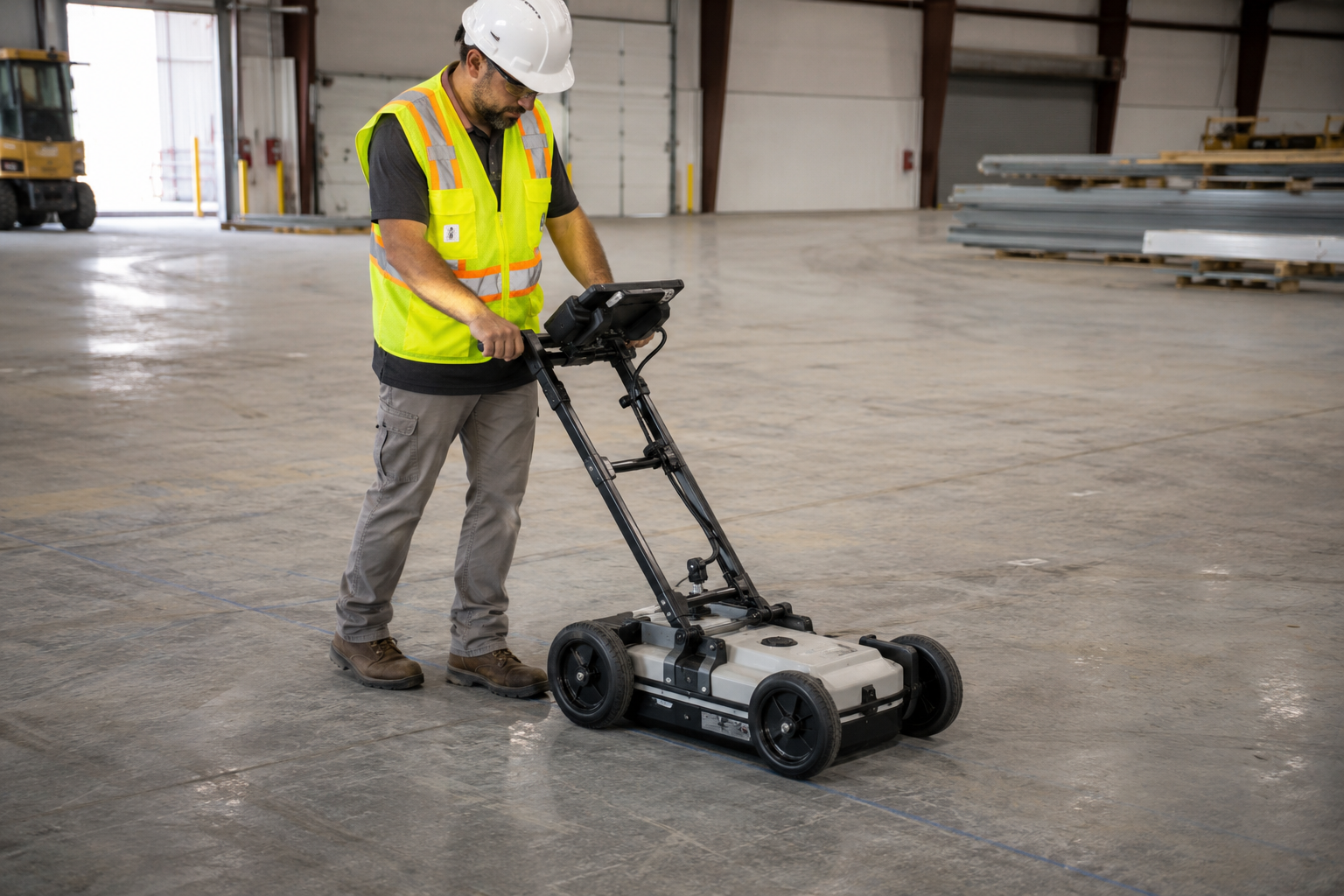
Concrete problems rarely start where people can see them. GPR concrete scanning helps crews look beneath the slab before small hidden gaps grow into bigger damage. GeoTek Services gives contractors and property owners a better way to understand what is happening below the surface before work begins.
A slab can crack, sink, or shift when the ground below it stops giving steady support. Guessing at the cause can waste money, delay repairs, and cause more damage. A scan can help point the repair team in the right direction before anyone cuts, drills, or opens the wrong area.
Here are the ways GPR helps find voids beneath slabs before they become bigger problems.
Key Takeaways
- Small voids under concrete can grow when water, weight, or weak soil removes support.
- GPR helps crews avoid guessing before they cut, drill, patch, or open the slab.
- A scan can reveal hidden risks like utilities, uneven thickness, and weak areas below the surface.
Tiny Empty Spaces Can Start Costly Slab Trouble
A small void under concrete can go unnoticed as the slab continues to take on weight day after day. GPR helps crews identify weak spots early, before the surface cracks, dips, or breaks.
Water Can Make Voids Spread
Water can wash soil away under the slab after leaks, poor drainage, or heavy rain. Once support is gone, the concrete may start to bridge over an empty space. GPR scanning helps crews see where the slab may have lost support before the damage spreads.
Heavy Loads Can Speed Up Damage
Forklifts, racks, machines, and trucks can put strong pressure on weak areas below concrete. A slab may hold for a while, then drop or crack once the hidden space grows too large. Finding these areas early helps teams plan repairs before daily use makes the problem worse.
Guesswork Can Lead To Wrong Repairs
A crack does not always show where the real problem begins. Crews may patch the surface while the weak area below keeps growing. GPR helps guide the repair plan so teams can focus on the area that needs attention first.
A Crack May Be A Warning, Not The Whole Story
Surface cracks can pull attention away from the real cause below the slab. Missing support under the concrete can let the slab keep moving after a patch dries. What looks like a small repair may come back if the space below stays weak.
Smart slab work starts with knowing what is happening under the damaged area. GPR can help connect the crack on top with the weak zone below it. Better scan data helps repair teams choose the right spot to open, fill, or reinforce.
Water Can Steal Support Without Leaving Obvious Clues
Water does quiet damage under concrete. A small leak, bad drain, or heavy storm can move soil out from under the slab. Empty pockets can grow while the top still looks normal.
Each new washout can make the slab weaker. Weight from foot traffic, racks, carts, or equipment can press down on areas with less support. Over time, the slab may start to dip, crack, or shift.
GPR scanning helps crews look below the surface before the damage spreads. The scan can show where support may be missing and where repair work should focus first. This helps teams fix the cause instead of only covering the surface problem.
How Do You Find Voids Under Concrete Without Breaking It?
Breaking the slab can create more mess before the real problem is known. GPR scans below the surface using radar signals and detects changes beneath the concrete. Those changes can help show where empty pockets or weak areas may be hiding.
This gives crews a better place to start before they chip, cut, core, or drill. Instead of opening several spots, the repair team can focus on the area that needs attention. The slab stays protected while the team learns what may be happening below it.
GeoTek Services helps crews check beneath concrete before repair work turns invasive. GPR can help when a slab has cracks, dips, hollow sounds, or signs of movement. With better field information early, teams can plan the next step with less waste and fewer surprises.
Uneven Slab Thickness Can Change The Repair Plan
A slab may look the same across the top, but it can change a lot underneath. Some areas may be thin, while other areas may hold more concrete than expected. GPR helps crews read those changes before they choose how to repair the slab.
Here is what uneven slab thickness can change during repair planning:
- Cutting Risk: Thin areas can leave less room for saws, cores, or drilling tools. Crews need to know where the slab narrows so they do not cut too far or damage what sits below.
- Load Support: Heavy equipment, storage racks, or daily traffic can stress thinner sections faster. A repair plan may require additional support if the slab is already weaker in key areas.
- Patch Performance: A patch may fail early if it is placed over concrete with uneven thickness. GPR helps crews understand where the repair area changes, so the fix can match the slab instead of guessing.
- Hidden Features: Thicker areas may hold rebar, conduit, drains, or old repairs. Scanning helps crews see where those features may affect cutting, coring, or filling work.
Better slab information helps crews make smarter repair choices before the work begins.

Void Patterns Can Point To The Real Cause
One empty space under a slab may seem like a small weak spot at first. Several gaps in the same area can tell a much bigger story. GPR helps crews see whether those gaps line up with water flow, old trench work, or weak soil below the concrete.
Pattern matters because the repair should match the cause. A drainage issue may require a fix other than a poorly packed base or an old utility path. Seeing the larger layout helps crews plan a repair that deals with the source, not just the visible damage.
Guesswork Can Waste Time And Damage Good Concrete
Wrong cuts can turn a small slab concern into a larger repair job. Crews may open a clean section first, then still have to move to another area to find the real issue. That adds labor, noise, dust, and patchwork to the project did not need.
GPR helps narrow the search before anyone breaks the surface. The scan gives crews a better sense of where the concern may be located under the slab. This keeps the work focused, protects solid concrete, and helps the repair team move with more confidence.
Stop Slab Problems Early With GPR Concrete Scanning
A slab can look solid while hidden voids quietly weaken the support beneath it. GPR concrete scanning helps bring those problems into view before cracks, sinking, or repair delays get worse. GeoTek Services gives property owners and contractors a smarter way to plan the next move before small gaps turn into expensive concrete trouble. Contact us now to learn more!
Frequently Asked Questions
Can GPR concrete scanning find problems before a slab cracks?
Yes, GPR concrete scanning can help detect hidden voids and weak areas before cracks appear on the surface. That gives crews a better chance to fix the support issue before the slab starts moving.
What causes empty spaces under concrete slabs?
Empty spaces can form when water washes soil away, poor compaction leaves weak support, or the ground shifts over time. These gaps can keep growing if the cause is not found and handled early.
Is GPR useful before drilling into concrete?
Yes, GPR is useful before drilling because it can help locate hidden items like rebar, conduit, pipes, and post-tension cables. This lowers the chance of hitting something important during repair or construction work.
Can a slab look fine and still have voids underneath?
Yes, a slab can look solid while the support below it is already starting to fail. GPR helps reveal what the eye cannot see, which makes repair planning less of a guessing game.
How does GPR help control concrete repair costs?
GPR helps crews focus on the areas that actually need attention instead of opening random sections of concrete. This can reduce wasted labor, extra damage, and surprise problems during the repair.